
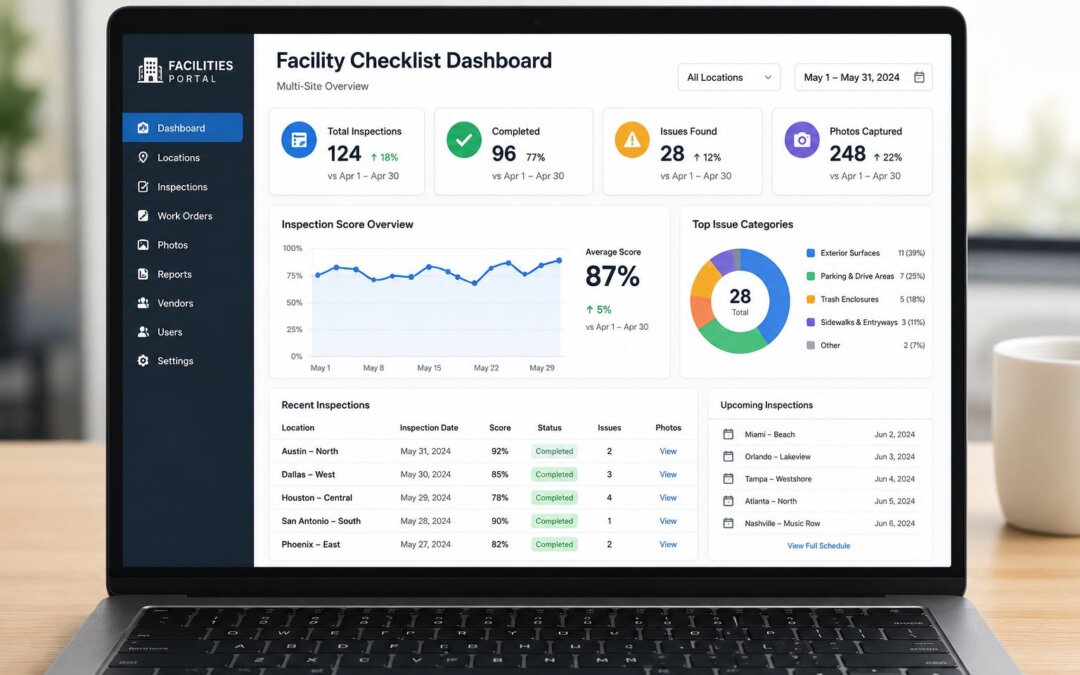
Most facility managers don't struggle because they lack maintenance vendors. They struggle because they lack visibility across every location. In the high-stakes world of multi-site operations, what gets inspected gets managed—and what goes unseen inevitably becomes an expensive liability.
The Regional Manager Challenge
Managing a single commercial property is fundamentally different from managing a portfolio of ten, twenty, or fifty locations. As portfolios grow, standards inevitably drift. A regional manager overseeing twenty locations may receive hundreds of emails, invoices, service requests, and maintenance updates every month. Without standardized reporting and documentation, it becomes nearly impossible to understand the condition of every property at any given time. Maintaining a consistent brand experience requires moving away from ad-hoc responses and toward a scalable, checklist-driven culture.
Why Property Appearance Matters
Customers expect consistency. When one location appears professionally maintained and another appears neglected, confidence in the brand begins to erode. Routine inspections and standardized facility cleaning programs help ensure that every location reflects the same operational standards, protecting the long-term value of your assets. Learn more about how property appearance impacts customer perception.
The Facility Manager's Monthly Checklist
This facility maintenance checklist provides a framework for multi-site managers to improve accountability and property performance.
- Sidewalks & Entryways: Check for gum, grease, and slip hazards to ensure a positive customer first impression.
- Dumpster Enclosures: Inspect for grease, odors, and pest activity to uphold sanitation standards.
- Parking Lots & Drive Lanes: Assess oil staining and surface debris that impact long-term asset life.
- Building Exterior: Identify wall staining, organic growth, and rust to maintain brand standards.
- Roof & Drainage: Inspect roof drainage points, downspouts, and areas prone to standing water to prevent major repair expenses.
- Service Verification: Confirm completion via photo evidence, not just invoices.
Why Standardized Inspections Matter
The purpose of a facility management checklist is not simply to identify problems; it is to create a repeatable inspection process across every location. Standardized inspections ensure that the same areas are reviewed each month, regardless of which manager or vendor performs the inspection. Over time, this consistency helps organizations identify trends, prioritize maintenance budgets, and reduce the likelihood of costly surprises. For multi-site operators, consistency is often the difference between proactive asset protection and reactive emergency spending.
Documentation as a Differentiator
Documentation is the backbone of accountability. Effective facility management requires a centralized repository for before-and-after photos, technician notes, service history, and detailed work orders. By storing these records in a Facilities Portal, managers gain the visibility needed to identify recurring trends—such as persistent drainage issues or areas prone to high contamination—before they escalate into major restoration projects.
Tracking Facility KPIs
Data-driven maintenance allows for proactive oversight. Successful facility managers monitor these key performance indicators:
- Property Appearance: Periodic inspection scores.
- Maintenance Activity: Completion rates of recurring facility cleaning services.
- Risk Management: Reduction in slip hazards and identified safety concerns.
- Documentation Compliance: The percentage of completed services accompanied by verification photos.
Vendor Consolidation
Managing disparate vendors across multiple states introduces massive administrative overhead and quality variance. By utilizing a consolidated partner for commercial property maintenance, you gain a unified reporting standard. This reduces communication gaps and ensures that your commercial property washing frequency is applied uniformly across your entire portfolio.
Visibility Creates Consistency
Visibility creates accountability, and accountability creates consistency. When you use systems to bridge the gap between regional offices and physical sites, you transform maintenance from a reactive drain on resources into a tool for asset protection.