
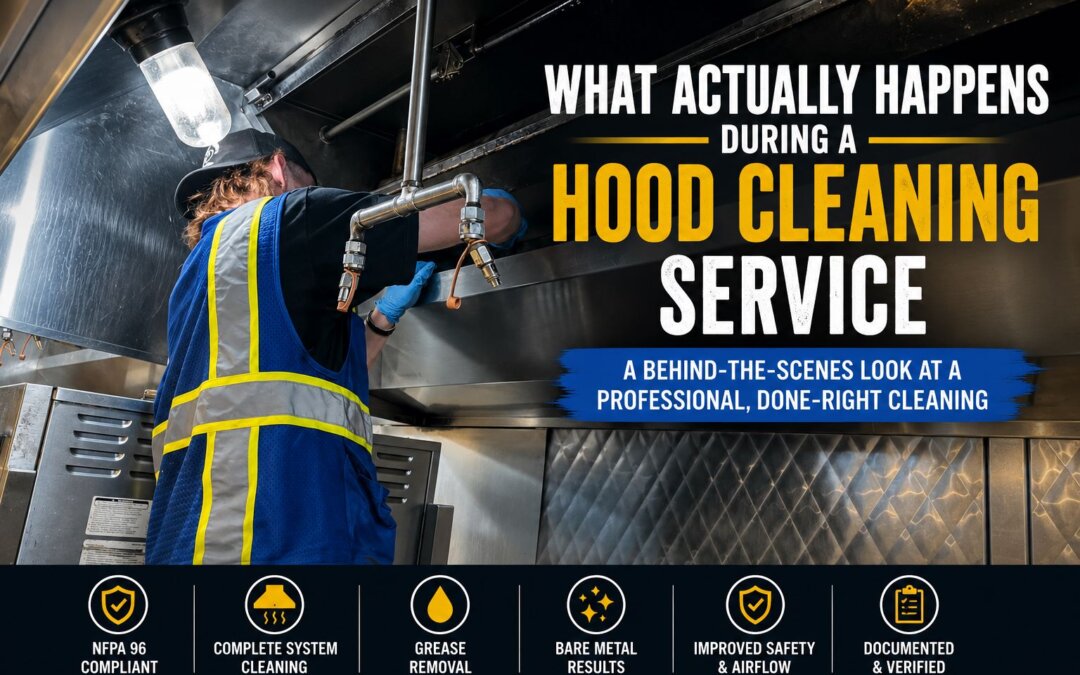
For many restaurant owners, the kitchen exhaust system is a “black box.” You know it’s there, you know it needs to be cleaned to remain compliant, but you rarely get to see the actual mechanics of the service. Because the system is designed to trap grease, it is inherently difficult to inspect, leading many operators to wonder what is actually being accomplished during a professional visit.
At PowerWash Pro, we believe in full transparency. Whether you operate a single local eatery or manage a franchise group across Arizona and New Mexico, understanding the cleaning process is the best way to ensure your facility remains safe, compliant, and efficient.
What Is Included In A Professional Hood Cleaning Service?
A true professional hood cleaning service goes far beyond wiping down the surfaces you can see. It is a systematic process that follows NFPA 96 standards to address the entire grease-laden pathway from the kitchen hood to the rooftop exhaust fan.
Step 1: Protecting The Kitchen Before Cleaning Begins
Before any water is turned on, preparation is critical. Our technicians protect your cooking equipment, electrical components, and flooring using heavy-duty plastic sheeting, absorbent barriers, and custom-fit covers. We ensure that your kitchen is fully prepared to handle the removal of grease and water without damaging sensitive appliances.
Step 2: Removing And Cleaning Hood Filters
After removing the filters, technicians inspect them for excessive buildup, damage, improper installation, and restricted airflow conditions. In many overdue systems, the baffle openings become heavily clogged with grease, reducing the system's ability to capture smoke and cooking vapors effectively. The filters are then cleaned separately using professional degreasers and hot water pressure washing equipment to remove grease buildup from all surfaces. Properly cleaned filters help restore airflow efficiency and improve overall exhaust system performance.
Step 3: Scraping Heavy Grease Deposits And Applying Degreaser
Before pressure washing begins, technicians remove heavy grease deposits manually. In overdue systems, grease can accumulate in thick layers throughout the hood, grease troughs, duct access areas, and fan components. These hardened deposits are scraped away to improve cleaning effectiveness.
Once heavy buildup is removed, professional hood cleaning degreasers are applied throughout the system. Degreasing agents are used on hood interiors, grease troughs, duct access points, fan housings, fan blades, and other grease-contaminated surfaces. This allows grease deposits to soften and break down before hot water cleaning begins.
Step 4: Hot Water Cleaning To Bare Metal
After the degreaser has had time to penetrate grease deposits, technicians utilize commercial-grade hot water pressure washing equipment to clean the system. The combination of heat, pressure, and professional degreasers breaks down grease deposits and allows contamination to be removed far more effectively than cold-water cleaning methods.
The goal is to restore surfaces to a bare-metal condition whenever possible. This includes hood interiors, grease troughs, duct access areas, fan housings, and related components.
Step 5: Cleaning The Rooftop Exhaust Fan
This is often the step restaurant owners never see, yet it is arguably the most important. The exhaust fan is the "engine" of your system. We clean the fan blades, internal housing, and the hinge kit that allows the fan to tilt back for access.
During this process, technicians also inspect grease containment trays, collection boxes, and rooftop grease recovery systems. When these components become overloaded, grease can escape containment and spread across roofing materials. Over time, this contamination may migrate from the roof to surrounding sidewalks, dumpster areas, loading zones, and other exterior surfaces throughout the property.
By ensuring your rooftop grease recovery containers are functional and properly managed, we prevent the migration of grease onto your roof and building exterior.
Step 6: Final Cleanup And System Reassembly
Once cleaning is complete, filters are reinstalled, access panels are secured, and the entire work area is cleaned. Protective plastic sheeting and containment materials are removed, floors are cleaned, and all surrounding surfaces are wiped down. Professional hood cleaning should leave the kitchen cleaner than it was found. Hood exteriors are wiped down, stainless steel surfaces are polished when appropriate, and technicians verify that no grease residue, standing water, or debris remains in the work area before the service is completed.
Documentation, Compliance, And Service Records
A professional service is only as good as the documentation provided. We provide detailed service reports and before-and-after photos for every cleaning. Proper documentation is especially important when warning signs such as grease accumulation, odors, restricted airflow, or rooftop contamination have been identified. We discuss these indicators in greater detail in our guide on signs your restaurant exhaust system is overdue for cleaning.
Managing Multiple Restaurant Locations
For multi-location managers, consistency is key. Our Facilities Portal provides a centralized hub where you can track service history, view photos of rooftop and ductwork conditions, and manage scheduling for every location in your portfolio. This ensures no site falls behind on critical maintenance, regardless of where they are located.
More Than Just Hood Cleaning
Many operators are surprised to learn that hood cleaning and restaurant cleaning solve two different problems. While hood cleaning removes grease from the exhaust system itself, exterior restaurant cleaning addresses the contamination that eventually reaches sidewalks, dumpster pads, drive-thru lanes, and customer entrances. We'll explore those differences in our guide on hood cleaning vs restaurant cleaning: what's the difference?.
Frequently Asked Questions
It depends on your cooking volume. As outlined in our guide on how often should restaurant hoods be cleaned, frequency is dictated by the amount of grease your kitchen produces.
While someone with key access must be present, we handle the entire setup, cleaning, and breakdown process.
Regular professional cleaning significantly reduces grease accumulation within the exhaust system, helping reduce fire risk and supporting compliance with NFPA 96 maintenance standards.
Final Thoughts
Understanding the process—from your kitchen hood to your rooftop fan—is the best way to safeguard your business. Professional hood cleaning is not just an expense; it is an investment in your kitchen’s safety, your facility’s exterior appearance, and your long-term operational success. If your system hasn’t been professionally cleaned recently, contact PowerWash Pro today to schedule an evaluation.