
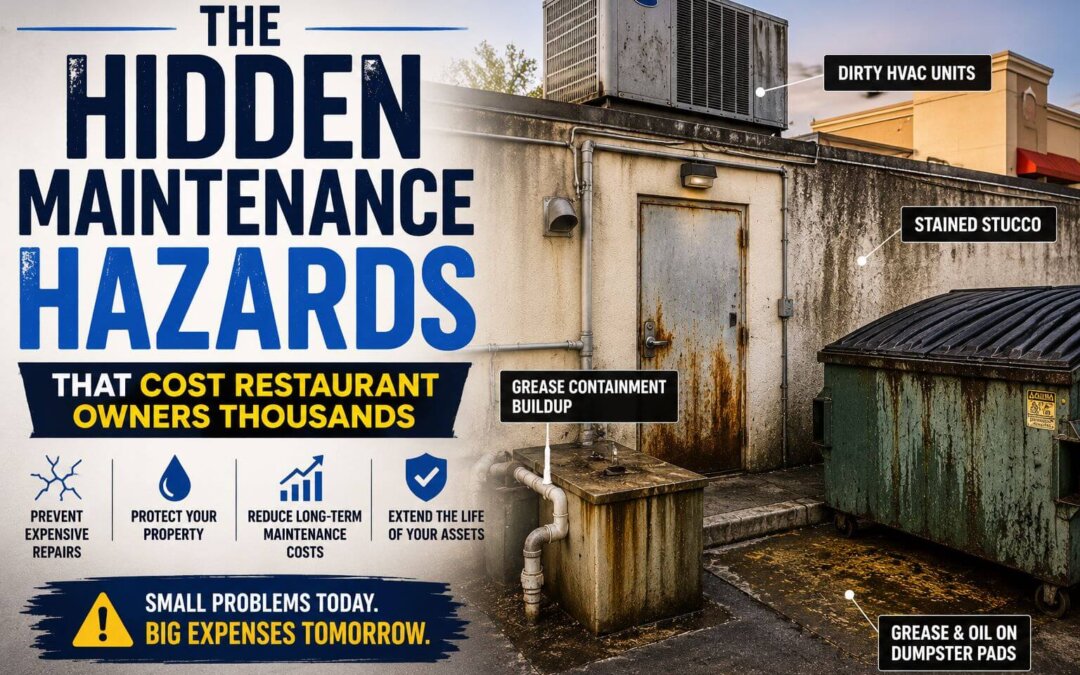
"Most restaurant owners focus on the dining room and kitchen, but neglect can lead to expensive exterior damage. Learn about the hidden hazards that threaten your property's lifespan and your bottom line."

In the restaurant industry, operational focus is almost always directed inward. If the kitchen is running, the dining room is full, and the hood cleaning is up to date, many operators feel their property is well-managed. However, 25 years of experience in Arizona and New Mexico has taught us that the most expensive repairs often start exactly where nobody looks: the exterior building envelope.
When you neglect the "envelope" of your property, you aren't just letting dirt accumulate—you are inviting accelerated depreciation, structural damage, and costly emergency repairs. In this post, we look at the hidden exterior hazards that silently drain your budget.
What These Problems Actually Cost
Many of these issues begin as maintenance problems but eventually become repair problems. We often see restaurant groups forced to write large checks for issues that could have been avoided with a consistent preventative maintenance schedule.
- HVAC Systems: Commercial rooftop HVAC replacement can easily exceed $10,000–$20,000 per unit.
- Roofing: Roof leak repairs often spiral into thousands of dollars once water intrusion reaches interior finishes and electrical systems.
- Concrete Assets: Concrete replacement around dumpster pad contamination areas becomes a major capital expense when deep grease saturation permanently destroys the structural integrity of the surface.
- Exterior Coatings: Stucco restoration and exterior repainting projects often cost significantly more than the cumulative cost of routine washing programs that protect these finishes.
In nearly every case, the cost of proactive maintenance is a small fraction of the cost of total restoration.
Problems We Notice During Routine Service Visits
One distinct advantage of servicing properties on a recurring schedule is that we identify problems developing long before the facility manager notices them. During our routine service visits, we frequently document failing caulking, blocked drainage systems, deteriorating roof penetrations, HVAC grease intake, and concrete pitting. By providing this insight early, we help our clients pivot from reactive fire-fighting to planned, budgeted maintenance.
Why Arizona and New Mexico Accelerate These Hazards
Restaurants throughout Chandler, Tempe, Scottsdale, Gilbert, Buckeye, Phoenix, and Albuquerque face environmental conditions that are rarely seen in other parts of the country. Extreme heat, intense UV exposure, periodic dust storms, monsoon moisture, and hard water mineral deposits create a "perfect storm" for deterioration. These conditions rapidly degrade roofing systems, dry out sealants, and accelerate the chemical bonding of grease to exterior surfaces. What might remain a simple surface stain in cooler climates often becomes permanently embedded into Southwestern stucco and masonry within weeks.
Top Hidden Hazards to Monitor
1. HVAC and Rooftop Grease Migration
Beyond the hood system itself, grease frequently migrates to your HVAC units. Because rooftop units intake air to cool your building, they often pull in greasy exhaust vapors from nearby fans. This coats internal coils, restricts airflow, and forces your HVAC system to work twice as hard. As we’ve explored in our research on grease migration from exhaust systems, this leads to premature compressor failure and massive energy waste.
2. Masonry and Stucco Degradation
In the Southwest, organic matter—algae, mold, and atmospheric pollutants—bonds with the substrate. Once these contaminants penetrate porous surfaces like stucco or masonry, they hold moisture against the building. During our monsoon seasons, this moisture can cause internal wall damage or efflorescence. Regular commercial pressure washing is the only way to neutralize these organisms before they cause structural paint or mortar failure.
3. The "Silent" Drainage Trap
We often encounter restaurants where the drainage systems around the building have been allowed to clog with debris and grease. When water cannot flow freely away from the building, it pools at the foundation. Over time, this leads to concrete cracking and potential water intrusion. Keeping these areas clear is a basic but essential part of facility maintenance.
Visibility Through The Facilities Portal
One reason many restaurant groups fall into the "reactive" trap is a lack of centralized data. You cannot manage what you do not track. PowerWash Pro’s Facilities Portal serves as an audit-ready command center for facility directors and multi-location managers. We provide: Detailed photo documentation of exterior conditions, archived service history for health department compliance, proactive maintenance logs that highlight developing issues, and budgeting forecasts that allow you to plan capital expenditures years in advance.
Frequently Asked Questions
High UV exposure and extreme desert heat bake contaminants into surfaces faster, while monsoon moisture accelerates organic growth and drainage issues.
As noted in our guide on exterior conditions inspectors notice, an unkempt exterior signals to inspectors that the entire property may be poorly managed, often leading to more rigorous interior scrutiny.
Yes. By documenting the condition of your exterior assets over time, you can accurately predict when repairs—such as concrete sealing or stucco repainting—will be required, avoiding emergency budget surprises.
Final Thoughts
Your property is a massive asset. Treating it as a "set it and forget it" environment is a recipe for high-cost repairs. By integrating exterior asset protection into your broader restaurant cleaning strategy, you can protect your capital investments and maintain a safer, more professional property. If you're ready to move from reactive repairs to proactive asset management, contact us for a full property assessment.